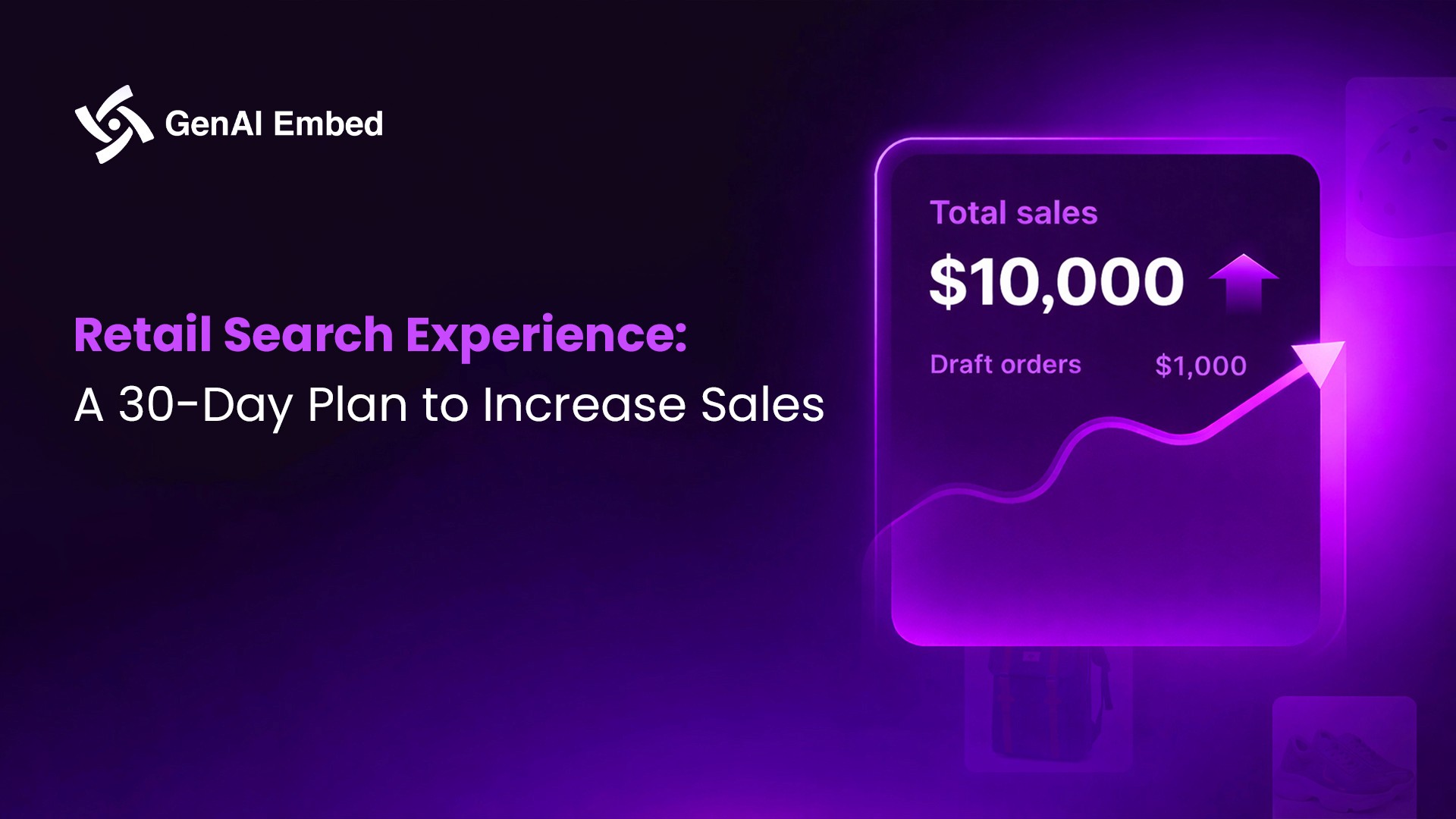
Retail Search Experience: A 30-Day Plan to Increase Sales

Product Marketing strategist


Retail leaders in the US are investing heavily in growth, loyalty, and digital experience. But there is one quiet place where revenue is often lost every day: Retail Search Experience.
Search visitors are not casual browsers. They are high-intent shoppers trying to find the right product fast. When search feels slow, confusing, or too broad, they leave. That exit is not just a missed sale. It also wastes paid media spend and weakens customer trust.
This guide breaks down what is happening, what it is costing, and what you can fix in 30 days to help shoppers buy faster and buy more per visit. It also explains how GenAI Embed PaletteAI supports collection-led discovery so search becomes a guided shopping journey instead of a product grid.
Why Retail Search Experience Matters to Revenue
Most sites treat search like a basic feature. Shoppers treat it like a decision point.
If shoppers search and cannot find what they mean, they stop trusting the site.
If they see too many options, they get unsure.
If they cannot see what goes together, they postpone the decision.
That hesitation shows up as:
lower conversion from high-intent traffic
more drop-offs after search
smaller carts and lower AOV
higher bounce from paid campaigns
In short, search is not just about finding products. It is about helping shoppers decide.
The Reality: Shoppers Don’t Search Like Your Catalog Is Built
Shoppers do not think in categories. They think in needs.
They search like:
living room setup
skincare routine for oily skin
wedding guest outfit
new home essentials
workwear basics
Even if they type one product, they are usually trying to complete a full need.
When search responds with a large grid and filters, shoppers must do the work:
scroll, compare, open multiple tabs, guess what matches, then decide.
Many do not complete that journey.
The Four Search Problems That Cause Most Drop-Offs
1) No results searches
Shoppers use common words. Catalogs use internal terms.
When shoppers see no results, many sessions end immediately.
2) Results that don’t match intent
Shoppers type a specific need and get broad products that don’t fit.
3) Too many choices, no direction
Even relevant results fail when the shopper has to decide alone.
4) Search shows single items, but shoppers need a full set
This is where AOV is lost.
Shoppers want the complete solution, not a list.
Sofa is not only a sofa. It is the full living room look.
Skincare is not one product. It is a routine.
Outfit is not a dress. It is the full look.
The Fix: Make Retail Search Experience More Guided
A stronger Retail Search Experience does three things:
It understands intent
It helps shoppers find what they mean, not just what they typed.
It helps shoppers decide faster
It reduces decision stress by giving clearer paths.
It helps shoppers complete the need
It shows what goes together, so shoppers buy more in one visit.
This is why curated collections are becoming essential for modern retail.
A 30-Day Plan to Improve Retail Search Experience
This plan is designed for leadership teams that want impact without a long rebuild.
Days 1–10: Remove “No Results” and Missed Matches
What to do:
Review top site search terms and identify “no results” queries
Add common synonyms and shopper language into product data
Ensure key attributes are consistently filled (type, style, size, material)
Business outcome:
fewer dead-end searches
more shoppers finding relevant products
quick lift in search engagement
Days 11–20: Improve Search Relevance and Product Clarity
What to do:
Ensure best sellers and proven converters show up for key queries
Reduce irrelevant results by improving naming and keyword alignment
Make results easier to scan with clear titles and attributes
Business outcome:
faster discovery
fewer drop-offs
improved conversion for search users
Days 21–30: Add Collections That Help Shoppers Buy Complete Sets
What to do:
Create collections based on your highest-intent needs, such as:
Complete Living Room Setup
Everyday Skincare Routine
Workwear Essentials
Weekend Party Look
New Home Starter Kit
Then surface these collections in the places shoppers actually use:
Homepage (shop by need)
Search results (guided next step)
Category pages (curated paths)
Campaigns (seasonal edits and promotions)
Business outcome:
higher AOV through completion items
faster decisions
stronger conversion from existing traffic
Where GenAI Embed PaletteAI Helps
Most retail teams already know collections improve shopping.
The challenge is creating and maintaining them consistently across seasons, campaigns, and inventory shifts.
GenAI Embed PaletteAI helps retailers build story-led, intent-based collections faster, so search becomes a guided shopping journey instead of a grid.
PaletteAI supports three goals that matter to leadership:
help shoppers decide faster
increase items per order by showing what goes together
keep the site fresh with faster collection creation
What to Measure After You Improve Retail Search Experience
To keep this initiative performance-driven, track:
search-to-click rate
search exit rate
conversion rate for search users vs non-search users
average order value from collection-led sessions
revenue per visit from search traffic
These metrics make the improvement measurable and easy to report.
If you want to improve your Retail Search Experience and see how GenAI Embed PaletteAI can create guided collections using your own catalog, reach out here:
https://www.genaiembed.ai/contact
Final Thought
Retail Search Experience should not feel like work.
When shoppers get long grids, they hesitate and buy less.
When shoppers get clear guidance and collections that make sense, they decide faster and buy more per visit.
If you are focused on growth in 2026, improving search outcomes is one of the most direct ways to increase revenue from the traffic you already have.