
Retail Search Experience: Help Shoppers Find Everything in One Search

Product Marketing strategist
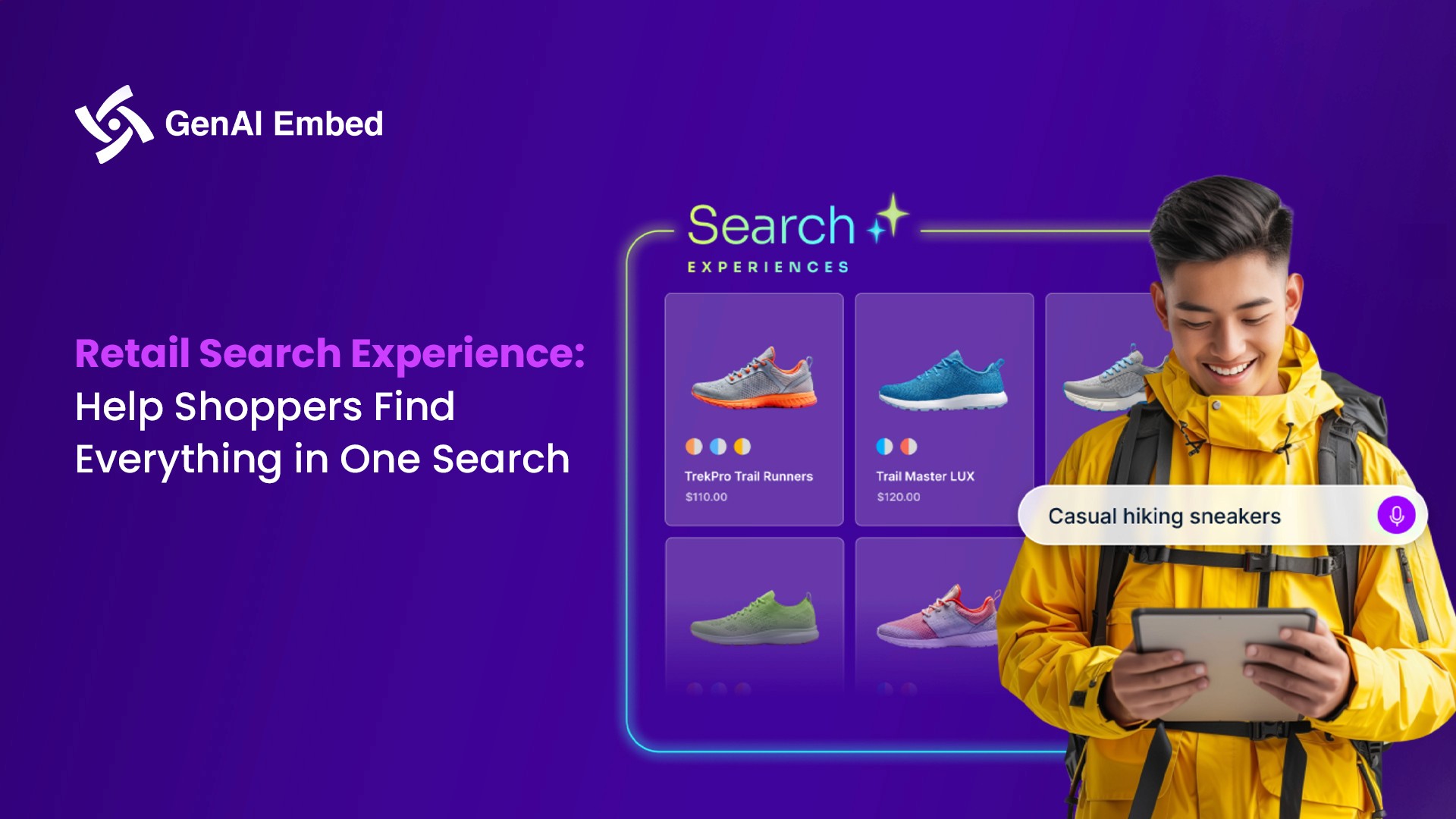


Retail Search Is Costing You Sales. Here’s the Simple Fix That Helps Customers Buy Faster and Buy More.
If you run an online store, you already know this pattern:
A customer lands on your site.
They search for a product.
They scroll and compare.
Then they leave without buying.
And it feels confusing, because your products are good and your prices are fair.
Here’s the truth most retailers discover late:
The customer did not leave because they did not like your store.
They left because they did not feel confident.
In ecommerce, confidence is everything.
When shoppers feel confident, they buy fast.
When they feel unsure, they delay, compare other sites, or abandon completely.
That’s why “search experience” has become one of the biggest hidden reasons ecommerce brands lose revenue.
The good news is the fix is not complicated.
You do not need to redesign your whole site.
You need one shift in the way your store helps people shop:
Stop selling single items only. Start selling complete solutions through curated collections.
The Real Problem With Ecommerce Search (In Simple Words)
Most ecommerce search works like this:
Customer searches “sofa”
Store shows 200 sofas
Customer gets overwhelmed
Customer leaves
That’s not a product problem.
That’s a shopping clarity problem.
Because the customer is not truly shopping for “a sofa”.
They are shopping for a complete living room feel.
They are thinking:
Will this sofa fit my space?
What color will match?
What rug will look good?
What table style goes with this?
What cushions will complete the look?
If your store shows only sofas, the shopper must imagine everything else.
Most shoppers cannot imagine it.
So they hesitate.
And hesitation is where sales die.
This happens in every retail category:
Beauty
Customer searches “skincare for oily skin”
Store shows many products
Customer is unsure what goes first, what works together
Customer leaves
Fashion
Customer searches “party outfit”
Store shows dresses only
Customer still needs shoes, bag, jewelry
Customer leaves
Home and Kitchen
Customer searches “dining table”
Store shows tables only
Customer still needs chairs, lighting, centerpiece ideas
Customer leaves
So the issue is simple:
Customers don’t want more options. They want the right set.
What Customers Actually Want Today
Shoppers are not asking your store for a list.
They are asking for help.
They want 3 things:
1) A quick visual direction
They want to see something that feels “this is the style” or “this is the set”.
2) Less thinking
They do not want to build a full solution piece by piece.
3) Confidence to buy now
They want to feel:
“This works together. I can trust this choice.”
If your store gives these 3 things, you will see results quickly:
fewer drop-offs
higher conversion
higher cart size
The Solution: Curated Collections (What It Means and Why It Works)
A curated collection is a group of products that belong together for a specific need or moment.
Think of it like the best in-store display.
In a physical store, customers buy more because they see complete setups:
mannequin styling
shelf bundles
room displays
“recommended pairings”
Online stores often miss this.
Collections bring that same “guided shopping” online.
Simple example: Sofa search
Instead of showing only sofas, a collection helps a shopper see:
Sofa options
Matching cushions
Rug suggestions
Coffee table matches
Lighting and decor add-ons
Now the shopper is not guessing.
They can shop the complete look.
That is why collections increase sales without feeling pushy.
Why Collections Increase Sales (Retail Owner Explanation)
Collections work for human reasons, not technical reasons.
Collections reduce confusion
When customers feel guided, they stop second guessing.
Collections make buying feel easier
When items are grouped clearly, shopping feels simple.
Collections increase “items per order”
Customers add more because the add-ons feel necessary, not random.
Collections reduce comparison shopping
When your store feels complete and clear, customers don’t feel the need to check competitors.
Collections make your store feel premium
A curated store feels like a brand with taste.
That builds trust fast.
The Outcomes You Can Expect (What Improves and Why)
When collections are done well, these are the outcomes retailers commonly see:
Customers stay longer
Because the store feels easier to browse.
Customers buy more in one visit
Because collections show what goes together.
Higher average order value
Because customers naturally add matching items.
Better repeat visits
Because collections keep the store feeling fresh.
Even if your traffic stays the same, collections can help you make more revenue from the same visitors.
How to Create a Collection That Sells (Simple 5-Step Method)
You don’t need a complex process. Use this repeatable method:
Step 1: Start with what customers search for
Use your search terms or best-selling items.
Examples:
Sofa
Dining table
Workwear
Oily skin skincare
Party dress
Step 2: Ask one question
“What else does the customer usually need to complete this?”
That question is the secret.
Step 3: Add “completion items”
Completion items are the supporting products that make the main purchase feel finished.
Example: If the main item is a sofa, completion items can be:
cushions
rug
coffee table
side table
lamp
Example: If the main need is skincare routine, completion items can be:
cleanser
moisturizer
sunscreen
serum (optional)
Step 4: Keep the collection small and clear
Collections should feel like an edited shortlist, not another messy category.
A good starting range:
10 to 25 products per collection
Step 5: Name it like a shopper would understand
Avoid internal names.
Good collection names:
“Complete Living Room Setup”
“Small Space Living Room”
“Everyday Skincare Routine”
“Weekend Party Look”
“Workwear Essentials”
Naming matters because it improves:
clicks
understanding
search visibility
Where Collections Create the Biggest Impact
Collections are powerful because they work across your whole store, not just one page.
1) Home page
Add “Shop by Need” collections.
2) Search results
When someone searches “sofa”, show:
“Complete Living Room Setup” as a collection option.
3) Category pages
Instead of one giant category page, create:
Modern style collection
Budget picks collection
Small space collection
Best sellers collection
4) Campaigns and seasonal moments
Collections are perfect for:
festive season
summer
back-to-school
wedding season
new year refresh
Collections make campaigns easier because you are promoting a full set, not one product.
Common Mistakes Retailers Make With Collections (So You Avoid Them)
Mistake 1: Making collections too big
If a collection has too many products, it becomes another category page.
Mistake 2: No story or reason
A collection needs a simple reason:
“why these products belong together”
One or two lines is enough.
Mistake 3: No completion items
If the collection is only the main item type, it doesn’t help.
The real money comes from completion items.
Mistake 4: Not updating
Collections should stay fresh.
Even small updates help the store feel active.
Where GenAI Embed Palette Helps (Non-Technical Explanation)
Most retailers already understand collections.
The real challenge is:
It takes time to build them
It takes effort to keep them updated
Teams struggle to scale collections across seasons, campaigns, and trends
GenAI Embed Palette helps retailers create and manage curated collections faster, so your store stays visually guided and easy to shop.
The goal is simple:
Help customers find everything they need in one journey, not five different searches.
Quick Summary
If your store only shows product grids, shoppers feel unsure.
Unsure shoppers don’t buy.
Collections fix this by making shopping:
visual
guided
complete
When customers see what goes together, they decide faster and buy more.
FAQs
What is a curated collection?
A curated collection is a set of products grouped for a specific need, moment, or style so shoppers can buy a complete solution.
Are collections better than categories?
Categories organize your catalog. Collections help customers choose faster. The best stores use both.
How many products should be in one collection?
Start with 10 to 25 products. Keep it simple and easy to shop.
How often should I update collections?
Seasonal collections can be updated monthly. Evergreen collections can be refreshed every quarter.
Will collections increase average order value?
Yes, because they naturally bring add-on products into the same shopping flow.
If you want to see what curated collections would look like using your own catalog, GenAI Embed can show you a quick walkthrough.
Book a quick demo: https://www.genaiembed.ai/contact