Fashion Ecommerce Personalization Strategies for 2026

Product Marketing strategist
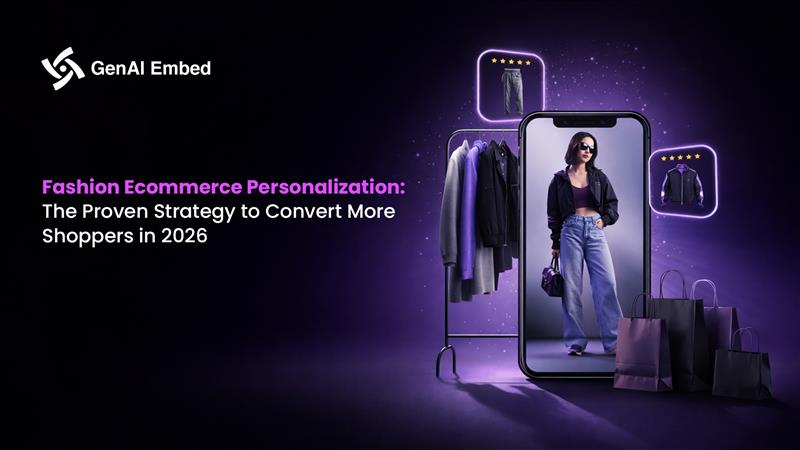


Nearly half of all fashion purchases are directly influenced by personalized recommendations. Yet most fashion ecommerce stores still show the same generic product grid to every visitor, regardless of their style, occasion, or purchase history.
That gap is costing fashion brands measurable revenue every single day.
Fashion ecommerce personalization is the practice of tailoring every element of the shopping experience, from the homepage to product recommendations to conversational guidance, to match each shopper's individual taste, context, and intent. It is the difference between a store that feels like it was built for everyone and one that feels like it was built specifically for the person standing in front of it.
In this guide, you will learn exactly why personalization in fashion ecommerce produces results that generic experiences cannot, which strategies have the strongest documented impact on conversion and retention, how leading fashion brands are implementing them in 2026, and how PaletteAI brings the complete personalization stack to fashion retailers of every size.
Why Fashion Ecommerce Personalization Is No Longer Optional
Fashion is the most personalization-dependent category in ecommerce. Style is inherently individual. What works for one shopper is completely wrong for another. And shoppers know it, which means generic experiences feel not just unhelpful but actually off-putting.
The data confirms what the experience makes obvious.
Fashion leads all industries with a 37% market share of personalization software adoption, according to Envive AI's 2026 personalization research. 50% of fashion purchases are directly driven by personalization, making it the highest purchase attribution rate of any retail category. And companies using AI personalization earn 40% more revenue than those without it, according to McKinsey data cited by Ringly.io's 2026 DTC statistics.
But the flip side of this opportunity is equally significant. The median conversion rate for fashion ecommerce sits at just 2.4%, according to Envive AI's 2026 fashion brand conversion statistics. That means nearly 98 out of every 100 visitors leave without buying. Top-performing fashion retailers exceed the 6.1% conversion threshold, while the lowest-performing stores convert only 0.2% of visitors. That 30-times performance gap sits almost entirely on the quality of the discovery and personalization experience.
Three forces make fashion ecommerce personalization non-negotiable in 2026.
Shoppers Have Higher Expectations Than Ever
Three-quarters of shoppers actively prefer brands that deliver personalized experiences over those offering one-size-fits-all approaches, according to Clothing Brands' 2026 AI fashion personalization research. This is not a preference for luxury or convenience. It is a baseline expectation that, when unmet, drives shoppers directly to competitors who do meet it.
Mobile Is the Primary Fashion Shopping Channel
81% of fashion transactions now occur on mobile devices, with 78.8% of traffic coming from smartphones and tablets, according to Envive AI's fashion conversion data. But mobile converts at 1.2% compared to 1.9% on desktop, a 37% gap that represents massive recoverable revenue for brands that close it through better mobile personalization.
Returns Are Destroying Fashion Margins
Fashion and apparel have a 25% return rate, nearly double the 14.2% ecommerce average, according to Ringly.io's DTC statistics. Processing a single return costs between 20% and 65% of the original item price. Personalization directly reduces returns by helping shoppers make better-informed, more confident purchase decisions before they buy.
The Six Strategies That Drive Measurable Results
Not all personalization delivers equal impact. These six strategies have the strongest documented evidence for fashion ecommerce specifically, and each connects to a different stage of the shopping journey.
1. Curated Collections Built Around Occasion and Aesthetic
The most fundamental shift in fashion ecommerce personalization is moving from category-based navigation to context-based discovery.
A category page labeled "Women's Dresses" forces the shopper to do all the work. They must browse hundreds of options, apply filters, and make judgments in isolation. A curated collection called "Wedding Guest Edit: Summer 2026" narrows the experience to a specific context, shows shoppers how pieces relate to each other, and removes the cognitive load of evaluating options that do not fit their occasion.
Collections built around occasion, aesthetic, trend, and season outperform category pages on every engagement metric because they answer the question the shopper is actually asking: not "what dresses do you sell?" but "what should I wear to a summer outdoor wedding?"
When these collections are personalized to each shopper based on their browse history, past purchases, and session behavior, the impact compounds. A shopper who has been browsing minimalist work pieces should land in an "Understated Office Edit" rather than a trend-led "Festival Season" collection.
Pro Tip: Build at least three to five new curated collections per month tied to upcoming occasions, seasons, or trend cycles. Shoppers who find a new collection worth exploring on a return visit buy at significantly higher rates than those who land on the same static category they saw last month.
2. AI-Powered Outfit and Style Recommendations
Cross-selling in fashion is fundamentally different from cross-selling in other categories. A shopper who buys a blouse does not just want "related items." They want to know what completes the outfit. What shoes work with this? What jacket transitions it to cooler weather? What bag finishes the look?
Static "frequently bought together" widgets fail this need because they surface popular combinations, not relevant ones. AI-powered outfit recommendations solve it by analyzing the specific item's aesthetic, color palette, occasion, and style profile, then surfacing complementary pieces that make sense together for this shopper's context.
Personalized recommendations drive up to 31% of ecommerce revenues in sessions where shoppers engage with them, according to Envive AI's personalization lift statistics. Sessions with recommendation engagement show a 369% increase in average order value. For fashion brands, where the natural basket involves multiple complementary pieces, this uplift is structural rather than incidental.
3. Conversational Styling Guidance
Almost half of all shoppers need assistance navigating fashion ecommerce stores but abandon when that help is not immediately available, according to Envive AI's fashion brand conversion research. The shopper has intent, has browsed, and is genuinely interested, but reaches a decision point they cannot navigate alone and quietly leaves.
A conversational styling assistant solves this by engaging the shopper in a real dialogue about their specific need. Not a scripted FAQ bot, but a genuine AI assistant that can handle questions like:
"I have a garden party in three weeks. What would work for that?"
"What goes with the green trousers I just added to my cart?"
"I want something smart casual that also works on evenings. Show me options."
"Find me something similar to this but more affordable."
Each of these questions is a purchase-ready signal. The shopper is not browsing speculatively. They have a real occasion and real intent. A conversational assistant that answers well converts that intent into a basket.
AI chat engagement drives a 4.2% revenue lift in fashion specifically, according to Clothing Brands' research. Customers using AI-assisted chat show 25% higher average order value than those who shop without guidance.
Pro Tip: Do not position your conversational assistant as a customer service tool. Position it as a personal stylist. The language, the prompts, and the conversation design should feel like talking to someone who understands fashion and genuinely wants to help the shopper find something they will love.
4. Personalized Homepage and Collection Page Experiences
A returning fashion shopper who landed in a workwear collection three weeks ago should not see a generic homepage on their next visit. They should see something that acknowledges what they have shown interest in, surfaces what is new in a context that makes sense for them, and creates a reason to continue exploring.
Real-time personalization delivers 20% higher conversion than batch processing approaches, according to Envive AI's lift statistics. Companies excelling at real-time personalization see 40% revenue increases versus competitors using static or segmented approaches.
For fashion brands, real-time homepage personalization means every returning visitor lands in a curated context rather than a generic front page. New arrivals are filtered and ordered by relevance to each shopper's aesthetic. Featured collections match their demonstrated style profile. The experience rewards repeat visits rather than repeating the same generic front page every time.
5. Personalized Email and Push Campaigns Tied to Behavior
Generic "new arrivals" emails are one of the weakest performing campaigns in fashion ecommerce. Personalized collection emails tied to shopper behavior are one of the strongest.
Segmented and personalized email campaigns generate six times higher transaction rates and average order value than non-personalized emails. AI-personalized emails lift average order value by nearly 28%, according to research cited in Alhena AI's upsell statistics.
The most effective fashion email frameworks move beyond product pushes to deliver curated ideas. Not "here are our new dresses" but "here are three ways to style the jacket you just bought for three different occasions this month." Not "you might like these" but "your saved items are back in stock, and we found the perfect pieces to complete that look."
Pro Tip: Set up a post-purchase email sequence that delivers a new collection suggestion tied to what was just purchased within 48 hours. A shopper who just bought a summer dress is primed to discover what shoes and accessories complete it. That window, handled with a relevant curated suggestion, consistently outperforms any standard follow-up email.
6. Return Reduction Through Better Pre-Purchase Guidance
Reducing returns is one of the highest-margin improvements available to fashion ecommerce brands, yet most tackle it at the logistics end rather than the decision end.
The most effective return reduction strategy is ensuring shoppers buy the right thing the first time. A fit assistant that asks three questions before recommending a size reduces returns by 18%, according to Clothing Brands' research. Guided selling that helps shoppers understand how an item fits within a complete look, and whether it suits the occasion they have in mind, removes the speculative buying behavior that produces the highest return volumes.
Total retail returns are projected to reach $849.9 billion in 2025, with online returns hitting 19.3% of all online sales, according to Envive AI's fashion brand conversion data. Fashion and apparel sit well above this average at 25%. Every percentage point of return rate reduction has a direct, immediate impact on net margin.
Real-World Examples: How Leading Fashion Brands Use Personalization
ASOS: Style Preferences as a Discovery Engine
ASOS allows customers to input their style preferences directly, creating a personalized fashion recommendation experience that adapts to those stated preferences alongside behavioral signals from browse and purchase history.
The outcome is a homepage and product feed that feels genuinely curated to each user rather than algorithmically random. ASOS saw a 75% increase in email click-through rates after integrating AI recommendations into their campaigns, according to Alhena AI's personalization research. "You might also like" drives 34% of their mobile revenue, according to Clothing Brands' statistics. The combination of stated preference data and behavioral signals creates a recommendation engine that feels less like guesswork and more like a brand that genuinely knows the shopper.
Expert Note: ASOS's success with personalization rests on the quality of their preference data collection. They ask shoppers directly what they like rather than inferring everything from behavior. This zero-party data approach produces more accurate personalization faster, particularly for new customers where behavioral history is limited.
Stitch Fix: Personalization as the Core Business Model
Stitch Fix built their entire business model on the principle that most fashion shoppers do not want to browse at all. They want curation done for them by someone who understands their taste. Their AI-human hybrid model combines algorithmic style matching with human stylist input to deliver personalized selections that shoppers evaluate at home.
The model produces a fundamentally different CLV profile than standard fashion ecommerce. Customers who receive genuinely personalized selections return at dramatically higher rates because the effort of discovery has been removed entirely. They are not evaluating hundreds of options. They are saying yes or no to a small set of highly relevant ones.
For brands without Stitch Fix's subscription model, the lesson is directional: the closer your discovery experience gets to "this was curated specifically for you," the higher your repeat purchase rate will be.
The Biggest Mistakes Fashion Retailers Make With Personalization
Understanding what breaks personalization execution is as important as knowing what drives it.
Mistake 1: Personalization That Only Lives on the Homepage
Many fashion brands invest in a dynamic homepage and treat personalization as done. But shoppers spend most of their time on product pages, collection pages, and the cart, all of which remain generic even after the personalized homepage has made a strong first impression. Personalization that only exists at the entry point creates a fragmented experience where the initial relevance quickly dissolves into the same generic grid everyone else sees.
Mistake 2: Recommendations Without Context
A "you might also like" widget that shows popular items from the same category is not personalization. It is popularity ranking with a personalization label. True fashion personalization shows items that make sense together: that complete a look, suit the same occasion, match the same aesthetic. Context is what separates a recommendation that feels helpful from one that feels random.
Mistake 3: Ignoring the Moment of Uncertainty
Most fashion abandonment happens not because shoppers disliked the products but because they felt uncertain. Uncertain about fit. Uncertain about whether the item suits their specific occasion. Uncertain about whether the combination they are building works. Generic product pages do nothing to resolve this uncertainty. Conversational styling guidance, social proof at the decision stage, and curated outfit suggestions address it directly.
Mistake 4: No Connection Between Online and Post-Purchase Experience
A shopper who buys a piece and receives no follow-up guidance on how to style it, what complements it, or what new arrivals match their demonstrated taste is a shopper who has no particular reason to return. The post-purchase window is when the relationship is most open to deepening, and most fashion brands leave it entirely unused.
How PaletteAI Delivers Personalization Across the Full Fashion Shopping Journey
Fashion ecommerce personalization is not a single tool. It is a layered experience that needs to work at every stage of the shopping journey, from first discovery to post-purchase continuation. PaletteAI is built to deliver this end-to-end, with each capability addressing a specific stage in the fashion shopper's path.
The Curated Collection Engine replaces static category pages with story-driven, occasion-led collections that make fashion discovery feel curated rather than browsed. Instead of "New Arrivals" or "Dresses," shoppers land in "Effortless Weekend Dressing," "Office to Evening Edit," or "Festival-Ready Picks." Each collection tells a story that gives the shopper a reason to explore the full set rather than evaluate individual items in isolation.
This connects directly to understanding how narrative-led buying and curated collections drive multi-item baskets in fashion categories. The collection is the context that turns a single-item browse into a complete look purchase.
The Personalized Discovery Layer ensures that each shopper sees the collections most relevant to their behavior and context. A shopper who has been browsing occasion dressing lands in occasion-led collections. A shopper who consistently buys casual separates sees casual edit collections on their next visit. The discovery surface adapts in real time rather than serving the same front page to every visitor.
This is part of a broader AI-powered retail personalization approach that extends beyond the website to email, push, and in-store touchpoints, making sure the same personalization logic follows the shopper wherever they engage with the brand.
The AI Recommendation Engine surfaces complementary pieces within the context of each collection. When a shopper views a tailored blazer inside an "Office Edit" collection, the recommendations show the trousers, shoes, and accessories that complete the look, not the bestsellers from the blazers category. Context-driven recommendations convert at dramatically higher rates than category-based ones because they answer the real question the shopper has: what does this look like as a complete outfit?
The Styling Assistant is the conversational layer that addresses the uncertainty that standard product pages leave unresolved. It engages shoppers who have intent but need guidance: the shopper who has been browsing for 12 minutes without adding to cart, the shopper who adds an item and immediately removes it, the shopper who opens the fit guide and then bounces. Real-time conversational guidance at these moments turns uncertainty into confidence and confidence into completed purchases.
Understanding what a virtual shopping assistant looks like in practice for fashion retail shows exactly how this moment of hesitation becomes a moment of conversion rather than a moment of abandonment.
The Omnichannel Activation Layer extends all of this across every channel the fashion shopper uses. A shopper who discovered a collection on Instagram should see that same collection context when they arrive at the website. A customer who bought a dress in-store should receive a personalized email with the shoes and accessories that complement it. Continuity across channels is what turns a single transaction into an ongoing relationship.
Together, these capabilities address every stage of the fashion personalization problem that most brands leave partially or entirely unsolved.
How to Measure Fashion Ecommerce Personalization Performance
Deploying personalization without a measurement framework is guesswork. These are the metrics that tell you whether your personalization is working and where to improve it.
Conversion rate by personalization engagement segment: Compare the conversion rate of shoppers who engaged with personalized collections or recommendations against those who did not. This is the most direct measure of personalization impact.
Average order value by discovery pathway: Shoppers who navigate through curated collections typically show higher AOV than those using standard category navigation. The AOV gap between these two groups quantifies the collection-led discovery value.
Return rate by guidance engagement: Compare the return rate of shoppers who used conversational styling guidance against those who did not. A lower return rate for guided shoppers validates the pre-purchase confidence improvement that personalization delivers.
Repeat purchase rate by personalization tier: Segment customers by their level of personalization engagement and track their 90-day and 180-day repeat purchase rates. Shoppers who engage deeply with personalized experiences should show materially higher repeat purchase rates.
Collection discovery depth: Track how many items shoppers view within a single curated collection. High discovery depth indicates that the collection context is genuinely engaging, not just a renamed category page.
Frequently Asked Questions
Q: What is fashion ecommerce personalization? Fashion ecommerce personalization is the practice of tailoring the shopping experience to each individual shopper based on their style preferences, browsing behavior, past purchases, and occasion context. It includes personalized homepages, curated outfit recommendations, AI conversational styling guidance, and behavior-driven email campaigns. In fashion specifically, personalization directly drives 50% of purchases, making it the highest purchase attribution rate of any retail category.
Q: How does AI improve personalization for fashion brands? AI processes behavioral signals, style preferences, and purchase history in real time to surface the most relevant products, collections, and outfit suggestions for each individual shopper. It adapts continuously as behavior changes, learns style preferences from implicit signals like hover time and browse depth, and enables conversational guidance at scale. Companies using AI personalization earn 40% more revenue than those without it, with fashion leading all categories in adoption and impact.
Q: How does personalization reduce fashion ecommerce returns? Personalization reduces returns by helping shoppers make better-informed, more confident purchase decisions before they buy. A fit assistant that asks three clarifying questions before recommending a size reduces returns by 18%. Conversational styling guidance that helps shoppers understand whether a piece suits their specific occasion eliminates the speculative buying behavior that produces the highest return volumes. Better decisions at the point of purchase directly lower the return rate.
Q: What is the difference between a curated collection and a product category in fashion ecommerce? A product category groups items by type: dresses, tops, trousers. A curated collection groups items by context: occasion, aesthetic, trend, or lifestyle. Collections answer the question the shopper is actually asking, not the inventory management question the brand needs to answer. "Wedding Guest Edit" tells a story and creates aspiration. "Dresses" is a filing system. Shoppers engage more deeply with collections and build larger baskets when products are presented in context.
Q: How long does it take to see results from fashion ecommerce personalization? Most brands see early indicators such as improved click-through rates, session depth, and return visit frequency within two to four weeks of deploying personalized collections and recommendation layers. Revenue-level impact, including conversion rate lift and AOV improvement, typically becomes measurable within 60 to 90 days. The average payback period for AI-powered personalization tools is nine months, with sustained returns growing over time as the system learns individual shopper preferences more accurately.
Conclusion
Three takeaways matter most from this guide.
First, fashion ecommerce personalization is not a feature. It is the core experience architecture of any fashion store that wants to convert beyond the 2.4% industry median. The 30-times performance gap between the lowest and highest-converting fashion stores is built almost entirely on personalization quality.
Second, personalization in fashion must go deeper than product recommendations. It requires curated collections that create discovery context, conversational guidance that resolves purchase uncertainty, and post-purchase intelligence that continues the relationship after the order confirms.
Third, the brands capturing the highest lifetime value from fashion shoppers are those whose experiences feel genuinely personal at every stage, not just at the homepage level.
PaletteAI brings all of this together in a single platform built specifically for fashion and lifestyle retailers. From story-driven curated collections to AI-powered outfit recommendations to a conversational Styling Assistant, PaletteAI addresses every stage of the personalization journey that drives conversion, retention, and margin in fashion ecommerce.
Request a Product Discovery Audit and see what personalized fashion discovery looks like for your specific catalog and customer base.
Sources and Citations
Envive AI: 63 AI Personalization in Ecommerce Lift Statistics 2026
Envive AI: 37 Fashion Brand Conversion Statistics for Ecommerce
Clothing Brands: 75+ AI Fashion Personalization Statistics 2026
Ringly.io: 45 DTC Ecommerce Statistics You Need to Know in 2026
Alhena AI: AI Product Recommendations for Upselling and Cross-Selling
WiserNotify: 50+ Ecommerce Personalization Statistics and Trends 2026